
In 1972, I watched the great Miami Dolphins win the Superbowl after a 14-0 record, the only perfect season in NFL history. And I moved to the San Francisco Bay Area in time to watch Joe Montana and the 49ers win Superbowls in 1984 and 1989 under coach Bill Walsh and later in 1990 and 1995 with Steve Young under George Seifert
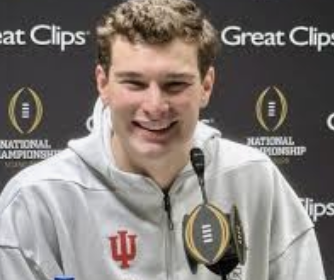 But nothing was more thrilling than to see the promising underdog, Indiana University’s Hoosiers, win a perfect 16-0 season last year, defeating the historic college teams of Penn State, Alabama, Ohio State and Miami. As improbable as it sounds, these wins revolved around IU’s star quarterback, Fernando Mendoza, who became IU’s first quarterback ever to win the Heisman trophy. In five games, Mendoza had more touchdown passes than incompletions, the best record in 25 years.
Yet, in one moment, all the euphoria popped, like a soap bubble, the emotion no more than passing clouds over the mind. And the ugly face hidden in this game of tackle football revealed itself.
On the first play of the Big Ten Championship game, Ohio State defensive end Caden Curry slammed into Mendoza, directly in the chest, a hit that Mendoza said later was like getting “hit by a freight train with no brakes.”
It left this 22-year-old kid with his whole life ahead of him lying face down on the grass. For a few agonizing seconds, no one knew how bad it was. Was Mendoza unconscious the way Joe Montana was unconscious after getting hit by the Giants’ Jim Burt a 1987 playoff game?
Or had he suffered a concussion like the Buffalo Bills’ quarterback Jim Kelly in the 1992 Super Bowl against the Washington Redskins? Would Mendoza lose any memory of the 4th quarter of the game, or wonder around afterwards not knowing which hotel he was staying in, or suffer “horrible headaches” for months, the way Jim Kelly did after his Superbowl concussion? Four years later, Kelly had another severe concussion in a 1996 playoff game against the Jaguars, had to be carted off the field and never played football again.
These aren’t the worst injuries for the star players in NFL football, either. I was living in New England when the Oakland Raiders safety Jack Tatum hit the Patriots’ wide receiver Darryl Stingley in a preseason game in 1978 at the Oakland Coliseum. Stingley was reaching for a pass, when Tatum drove his shoulder pads smacked into Stingley’s helmet.
Before Stingley landed backward on the Coliseum’s natural blue grass a split second later, his neck was already broken and his spinal cord severely compressed. Stingley lay on the field, motionless for 10 minutes, a quadriplegic for the rest of his life. He died at the age of 55 from medical complications.
By most accounts, the incident haunted Tatum afterwards, but he apparently never apologized for the incident in his book, “They Call Me Assassin.” Many years later, I lived within blocks of the Oakland Coliseum and even though I loved Oakland, I detested the Raiders, the so-called “Raider Nation,” and their dictatorial owner Al Davis.
“The Raiders built an organization built on intimidation,” wrote Adam Rank, a writer for nfl.com. “From the simple black uniforms to players who just seemed to play just outside of the rules, to the owner himself — the Raiders struck fear into opponents.”
For a while, fear and intimidation seemed to work. The Raiders won 73% of their games from 1965 to 1985, including three Superbowls. Since then, they have sunk to the second worst record behind the Cleveland Browns, winning only 36% of their games in the last 20 years.
Who can doubt the power of karma?
I noticed in those recent years that the worse the Raiders played on the field, the more the fans adopted the fading “outlaw” and “bad boy” reputation themselves with wild fights with security guards. After the last game in Oakland, which they lost, of course, the fans booed and threw trash on the field – on national TV.
Now in a new stadium in Las Vegas, this miserable, woe-begotten team with a 3-14 record last year, profits from football’s topsy-turvy logic: the worst team is given the top pick for the best player in the NFL draft – this spring, Mendoza wins that unfortunate prize.
And of all places, this devout and very public Catholic gets to live in Sin City, the country’s epicenter of gambling and prostitution, So far, we’d told not to worry; he has been welcomed by the local Catholic community and may live in Henderson, 20 minutes away from the stadium.
In spite of all this flash and sizzle of millionaire football, a far cry from the neighborhood pick-up games I remember as a child, I’m still haunted by the image of Mendoza lying on the field, face down, motionless, then slowly getting up and limping over to the benches. It turned out he only had the air knocked out of his lungs. He only missed one play, returned and led the Hoosiers to a 13-10 win over Ohio State.
He was fine.
This time.
And the next time?
Where will all the ecstatic fans be if Fernando Mendoza winds up suffering from months of “horrible headaches” after a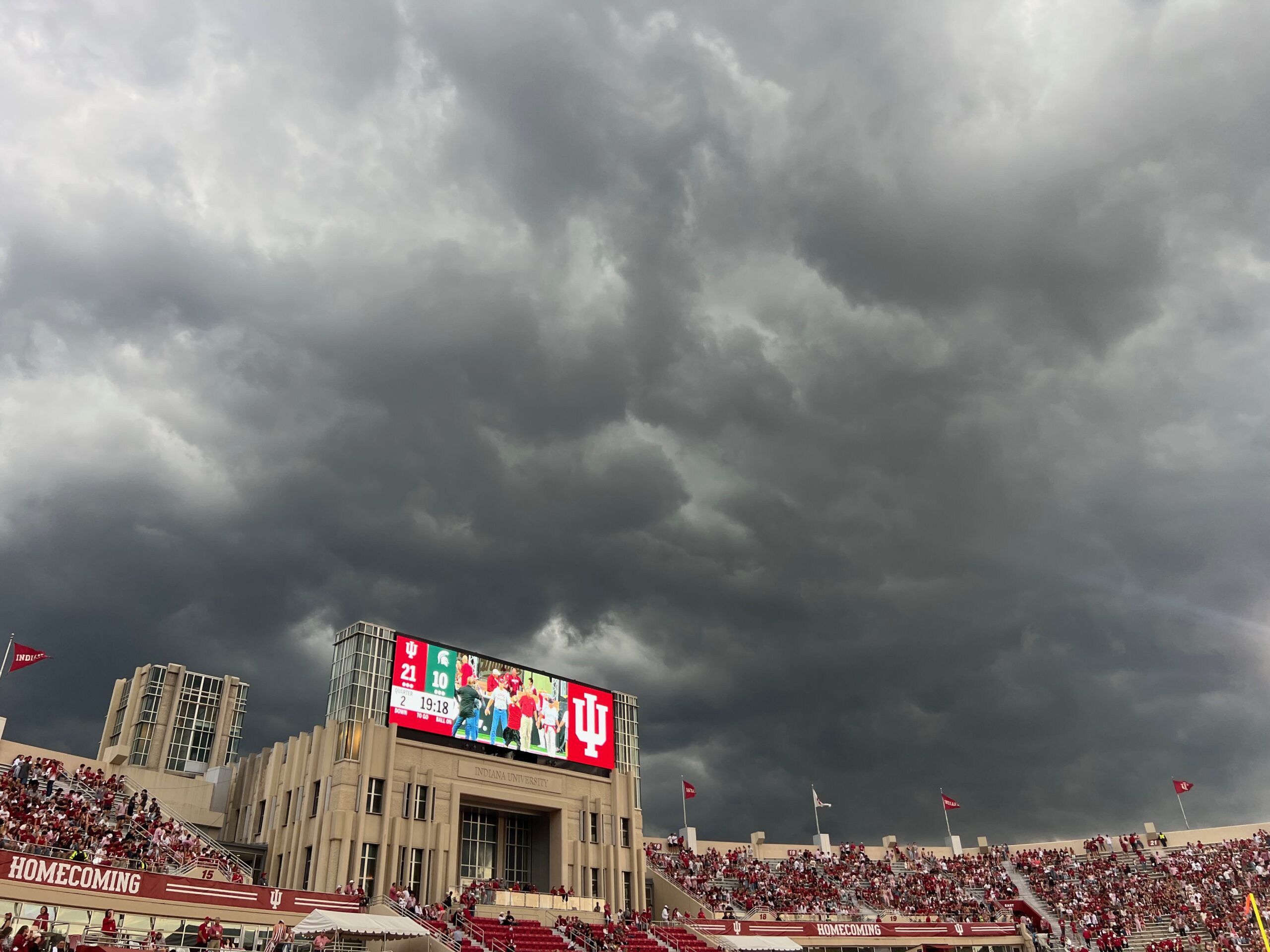 NFL playoff game, as Jim Kelly did in 1992? Will the cheerleaders still shout and dance for him if he is knocked unconscious and can’t deliver the next miracle pass?
And the millions of dollars? The toasts of the alumni? The microphones thrust into his face? Who will be the next young “star” they all rush to worship?
After every game, Fernando points up to heaven with his two forefingers and says he “gives all the glory to God”?
Really?
In all these thrills, nightmares and tragedies, where is God, really?
<♦>